Property Documents to Check Before Buying in Gurgaon: Updated for 2026
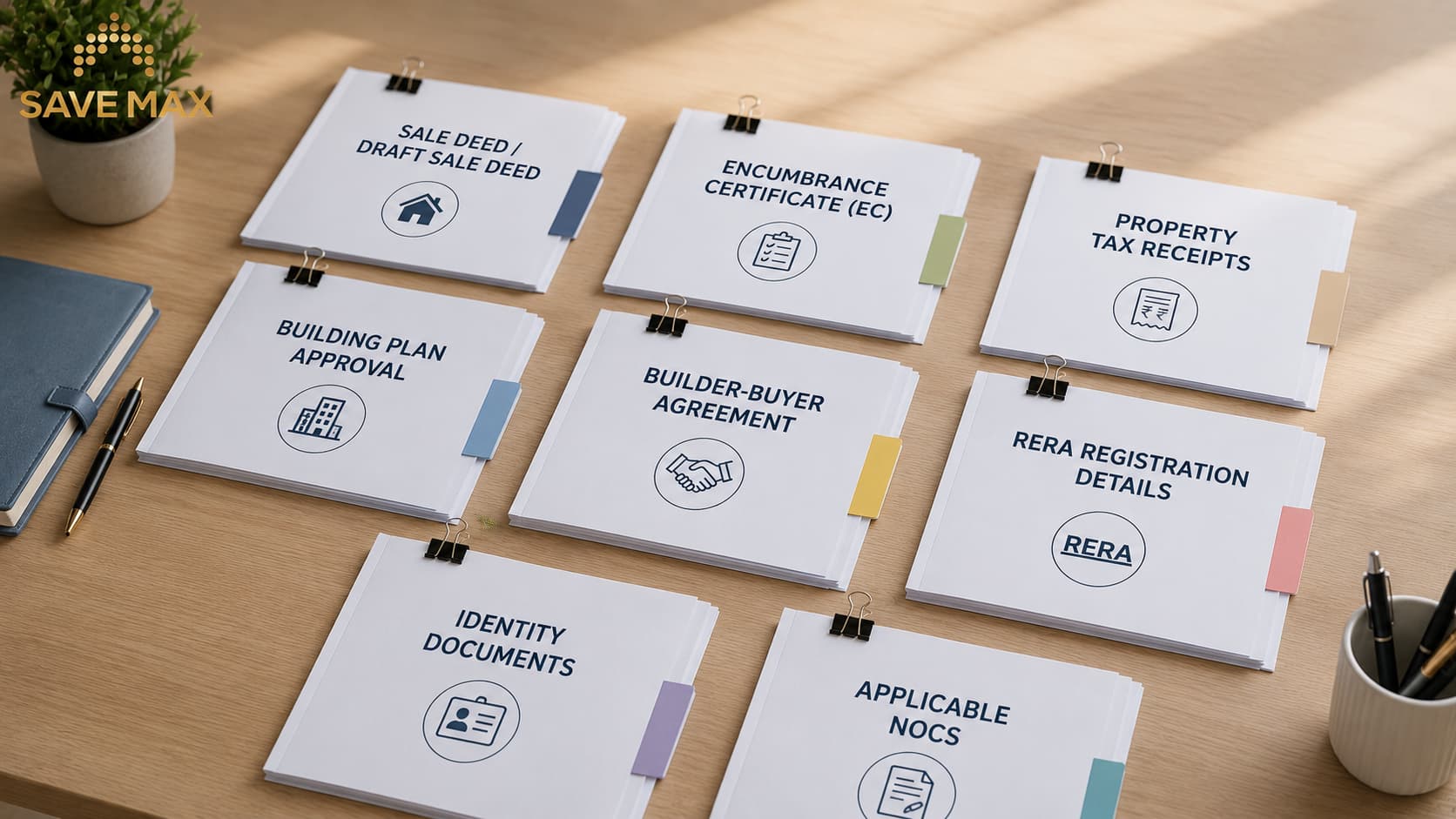
Buying a property in Gurgaon? Get ready for paperwork and more paperwork.
Evaluating the location, builder or price is what a buyer thinks of first. However, the property documents behind the transaction are just as important because they establish ownership, confirm legal compliance and help you understand exactly what you’re buying.


A property may look attractive on paper and even in person, but incomplete or wrong paperwork will lead to delays, disputes or unexpected complications later. Buyers should review all the relevant documents before paying a booking amount, before signing the agreement, and again before registration
This guide explains the key documents every homebuyer should review, why they matter and when they should be checked during the buying process.
At a Glance
Before committing to a property, make sure you’ve reviewed the documents that establish ownership, legal compliance and transaction readiness. The table below lists out the most common property documents that you will need.
| Document | Why It Matters | When to Review |
| Sale Deed / Draft Sale Deed | Establishes ownership and transfer terms | Before booking & before registration |
| Encumbrance Certificate (EC) | Checks for mortgages, liens or legal liabilities | Before booking (especially resale) |
| Property Tax Receipts | Confirms municipal dues are cleared | Before final commitment |
| Building Plan Approval | Verifies approved construction | Before booking |
| Builder-Buyer Agreement | Defines payment schedule, possession and obligations | Before signing |
| RERA Registration Details | Confirms project registration and statutory disclosures | Before booking |
| Identity Documents | Required for registration | Before agreement |
| Applicable NOCs | May be required for transfer or registration | Before registration |
Why Is This Step Crucial?
Most property-related issues arise because documents aren’t reviewed properly until the transaction is already underway.
Documents tell a story that goes beyond the owner of the property. They confirm whether the project has the necessary approvals, whether there are outstanding legal or financial liabilities and whether the transaction is ready to proceed.
Remember that the best time to review property documents is before paying the booking amount. This is when you have the maximum flexibility to compare projects and seek clarification.
What Do Property Documents Tell You?
Every document serves a specific purpose, but together they answer critical questions:
- Does the seller have the legal right to sell the property?
- Is the property free from obvious legal or financial liabilities?
- Has the project received the necessary approvals?
- Are municipal dues up to date?
- Is the property ready for registration?
If any of these questions cannot be answered clearly, it’s worth pausing and asking more questions before moving ahead.
Understand the Buying & Property Documents Timeline
Different documents become important at various stages of the purchase.
This is a process and not a single done-and-dusted transaction. So, be patient and ensure you have all the paperwork to ensure your home is legally yours.
| Stage of Purchase | Documents to Prioritise |
| Before Booking | Sale Deed (where applicable), EC, RERA details, Building Plan Approval |
| Before Signing the Agreement | Builder-Buyer Agreement, Cost Sheet, Identity Documents |
| Before Registration | Final Sale Deed, Property Tax Receipts, Applicable NOCs, Identity Documents |
Property Documents to Verify First
The first set of checks should focus on ownership and legal clarity.
Sale Deed
The Sale Deed is the primary legal document that records the transfer of ownership from the seller to the buyer.
For resale properties, review the existing Sale Deed. For under-construction properties, ask to review the draft Sale Deed to understand how ownership will eventually be transferred.
Encumbrance Certificate (EC)
The Encumbrance Certificate helps establish whether the property carries any recorded legal or financial liabilities, such as mortgages or charges.
This is particularly important for resale properties.
Identity Documents
Both buyer and seller need their identity documents for legal verification and property registration.
These typically include:
- Aadhaar
- PAN
- Other officially accepted identification documents, where applicable
Documents to Review Before Booking
Before paying even a token amount, ask for these property documents and carefully review them.
Building Plan Approval
For under-construction projects, approved building plans confirm that the project has received the necessary statutory approvals.
RERA Registration
Verify the project’s registration on the Haryana RERA portal. Compare the information provided by the sales team with the disclosures available on the website.
Builder-Buyer Agreement
Don’t treat this as a mere formality. You must take your time to understand these provisions before signing:
- Payment milestones
- Possession timelines
- Delay clauses
- Cancellation terms
- Maintenance responsibilities
- Rights and obligations of both parties
Property Documents for Resale Units
Although relevant for every transaction, the Encumbrance Certificate is particularly important for resale properties. In addition, they require a few additional checks.
Chain of Title
The Chain of Title establishes how ownership has passed from one owner to another over time. An incomplete ownership trail deserves further investigation before proceeding.
Property Tax Receipts
Recent tax receipts help confirm that municipal dues have been paid. Outstanding dues may ultimately become the buyer’s responsibility after the transfer.
Documents Required at Registration
Registration is the final legal step in transferring ownership. Here, the requisite property documents typically include:
- Final Sale Deed
- Buyer and seller identity documents
- Supporting ownership records
- Applicable NOCs
- 2 Witness details (as part of the deed registration process).
- Other documents required by the Sub-Registrar
Remember that stamp duty and registration charges are separate statutory payments that should already have been factored into your acquisition budget.
Common Mistakes Buyers Make
A common mistake is assuming that a property is safe to buy simply because it looks finished or is being sold by a known brand.
Other mistakes include:
- Assuming documentation can wait until registration.
- Relying only on brochures or verbal assurances.
- Not reviewing the Encumbrance Certificate.
- Ignoring outstanding municipal dues.
- Signing the Builder-Buyer Agreement without reading key clauses.
- Failing to verify RERA registration independently.
We often see buyers spending weeks comparing layouts, amenities and pricing, but only a few minutes reviewing the documents.
The strongest buying decisions combine both: a property that feels right and paperwork that stands up to careful scrutiny.
Questions We’d Ask
Before paying a booking amount, we encourage you to ask:
- Can I review the Sale Deed or Draft Sale Deed?
- Is the Encumbrance Certificate available?
- Are municipal taxes fully paid?
- Has the Building Plan been approved?
- Is the project registered under Haryana RERA?
- Are any NOCs required before registration?
- What documents will I need at registration?
- Do the names, measurements and ownership details match across all documents?
FAQs About Property Documents
Which document is the most important?
There isn’t a single most important document. The Sale Deed, Encumbrance Certificate and Builder-Buyer Agreement each serve different purposes and should all be reviewed carefully.
Are the required documents different for new and resale properties?
Yes. Resale properties typically require additional ownership verification, including the Chain of Title and updated municipal records.
Should I review documents before paying the booking amount?
Absolutely yes. Early verification gives buyers more time to identify potential concerns and compare different opportunities objectively.
Can I rely solely on the builder’s sales team?
No, not really. Sales representatives play an important role in explaining the project, but buyers should independently verify key documents wherever possible, particularly RERA information, approvals and ownership-related paperwork.
Our Advice
Property documents are not just paperwork; they are an intrinsic part of the property itself.
Featured Projects
More projectsBefore comparing prices, amenities or payment plans, make sure you understand the legal foundation of the transaction. Reviewing documents early helps reduce uncertainty, encourages better questions and gives you greater confidence for making a significant financial commitment.
If you’re evaluating a property in Gurgaon and would like help with review of the documentation, cost sheet or transaction process, we’d be happy to help you understand what to look for.
About The Author
